
Interpretation of the Impact of Standard CNCA-C11-08:2026 on CMS Electronic Mirrors and Leiditech EMC Protection Solution Upgrade Design Guide
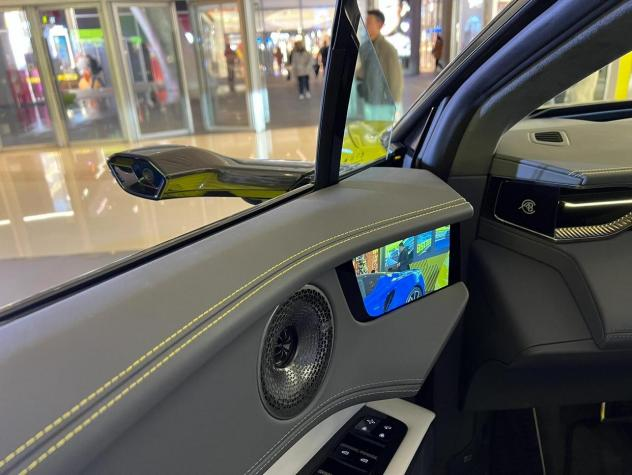
1 Overview and Background
1.1 Key points of CNCA-C11-08:2026 new regulation
CNCA-C11-08:2026, the "Implementation Rules for Compulsory Product Certification – Indirect Vision Devices of Motor Vehicles" (trial), was issued by the Certification and Accreditation Administration of China on April 11, 2026, and became effective on July 1, 2026. It comprehensively updates the CCC certification requirements for motor vehicle indirect vision devices (including both traditional optical rearview mirrors and new CMS electronic mirror systems).
· From July 1, 2026: Certification bodies began accepting CCC certification applications under CNCA-C11-08:2026.
· From January 1, 2027: The new version becomes mandatory. Products that have not obtained CCC certification will no longer be permitted for sale, import, or use in business activities.
The most significant change in the new regulation is that CMS electronic mirror systems, as a new type of motor vehicle indirect vision device, are formally included in the scope of mandatory CCC certification. This means that EMC performance indicators such as ESD and transient disturbance are upgraded from recommended references to mandatory test items. Products must pass complete testing by designated laboratories before they can be certified and brought to market.
1.2 CMS (Camera Monitoring System) System Architecture
A typical CMS electronic mirror system consists of the following core components, forming a complete signal chain from image capture to display:
· External camera module: Installed on both sides of the vehicle (doors or fenders), integrating a CMOS image sensor, lens, GMSL serializer, and power management circuit. It is responsible for capturing real-time external images, operating in harsh exterior environments and facing the highest level of EMC threats.
· Cabin controller: Typically installed inside the cabin (dashboard or trunk area), equipped with a SoC main control chip. It receives and processes high-speed video data from both cameras, performs image stitching, latency compensation, brightness/contrast adjustment, and outputs video signals to both side displays.
· A-pillar display module: Installed on the inner side of the driver-side A-pillar or the door triangle area, using LCD or OLED panels. It receives video signals from the controller via MIPI DSI or LVDS interfaces, displays real-time external images, and replaces the field-of-view function of traditional optical rearview mirrors.

1.3 Associated standard system
The EMC certification testing for CMS electronic mirror systems involves a multi-level standard system. The CNCA-C11-08:2026 CCC certification implementation rules reference GB 15084-2022 Motor vehicles — Performance and installation requirements for indirect vision devices. GB 15084-2022 further references GB 34660-2017 Road vehicles — Electromagnetic compatibility requirements and test methods, which in turn references a series of basic EMC standards. Overall, this standard system includes:
|
Standard number |
Standard name |
Relationship with CMS |
|
GB 15084-2022 |
Motor vehicles — Performance and installation requirements for indirect vision devices |
CMS system functional requirements; the regulatory basis for replacing traditional rearview mirrors |
|
GB 34660-2017 |
Road vehicles — Electromagnetic compatibility requirements and test methods |
Vehicle-level EMC test standard; CMS must meet vehicle-level EMC compatibility requirements |
|
GB/T19951-2019 |
Road vehicles — Test methods for electrical disturbances from electrostatic discharge (= ISO 10605) |
ESD test method for automotive electronic components; defines contact/air discharge levels. CCC certification requires Level 3 (150pF/330Ω category 1): contact ±6kV, air ±8kV, Criterion B. To improve product reliability, manufacturers may apply higher Level 4 (150pF/330Ω category 1): contact ±8kV, air ±15kV, Criterion A |
|
ISO 7637-2 |
Road vehicles — Electrical disturbances from conduction and coupling (pulses) |
Defines waveforms and severity levels for vehicle power supply transient pulses (load dump, etc.) |
|
GB/T 33012 |
Road vehicles — Test methods for the immunity of vehicles to narrow-band radiated electromagnetic energy |
Immunity test methods for CMS enclosure ports, power ports, and signal ports |
|
CISPR 12 - 2005 |
Vehicles, boats and internal combustion engines — Radio disturbance characteristics — Limits and methods of measurement for the protection of on-board receivers |
Radiated emission measurement methods for CMS enclosure ports |
2 Comparison of protection requirements before and after standard implementation
The implementation of CNCA-C11-08:2026 has elevated the EMC protection requirements for CMS electronic mirrors from "voluntary reference" to "mandatory access," fundamentally impacting product design. The table below systematically compares the key changes before and after implementation:
|
Comparison Dimension |
Pre-Implementation (Reference Phase) |
Post-Implementation (CCC Mandatory Certification Phase) |
|
Standard nature |
GB/T 17626 series are recommended standards, voluntary for enterprises to reference and implement. |
CNCA-C11-08:2026 is a mandatory certification rule; ESD, surge, and EMC are mandatory test items. |
|
ESD protection level |
Each enterprise defines its own requirements on a voluntary basis. Common practice is Level 3 (Category 1): contact ±6kV / air ±8kV; some products only reach contact ±4kV. |
Uniformly requires ISO 10605 Level 3 (Category 1): contact ±6kV / air ±8kV. |
|
Transient disturbance protection |
Only basic TVS protection on some power ports, no systematic requirements. |
Must pass ISO 7637-2 pulse 5a (87V/400ms), pulse 5b, and other load dump tests. |
|
Component selection requirements |
Components may be freely selected from consumer-grade, industrial-grade, or automotive-grade. |
Explicitly requires the use of automotive-grade (AEC-Q101 certified) components, with complete PPAP documentation. |
|
Testing and validation |
Primarily self-inspection by enterprises, no unified test standard. |
Must complete full testing by CNAS-accredited laboratories in accordance with standard methods; reports are included in CCC certification files. |
|
Market access threshold |
No mandatory certification requirements, free to market. |
Without CCC certification, products may not be sold, imported, or used; violators bear legal liability. |
|
Protection design philosophy |
Single-point passive protection, each module designed independently. |
Systematic protection design, with EMC protection strategy coordinated at the architectural level. |
|
Documentation requirements |
No special documentation requirements. |
Requires complete design reports, test reports, FMEA analysis, component lists, etc. |
3 Electromagnetic interference threats faced by CMS systems
CMS electronic mirror systems operate in complex automotive electrical environments, facing multiple electromagnetic interference threats. A thorough understanding of the waveform characteristics and coupling paths of each threat is a prerequisite for developing effective protection solutions.
Electrostatic discharge (ESD) is the most direct and destructive electromagnetic threat faced by CMS systems. The external cameras are directly exposed to the outdoor environment; in dry climate conditions, human body model discharge or discharge from the human body to the vehicle body can directly affect the camera housing and connector.
Typical waveform characteristics of ESD events: extremely short rise time (0.7~1ns), peak current up to tens of amperes, spectrum ranging from a few MHz to several GHz. For high-speed signal lines in CMS systems (GMSL, LVDS, MIPI, etc.), ESD protection devices must have extremely low junction capacitance (Cj ≤ 0.5pF) to avoid signal integrity degradation. The ULC series ultra-low capacitance TVS devices from Shanghai Leiditech perfectly meet this requirement.
Transient disturbance threats in the vehicle environment are mainly manifested as various transient pulses defined in ISO 7637-2, of which the most destructive is the load dump pulse:
|
Pulse Type |
Waveform Parameters |
Impact on CMS System |
|
Pulse 5a (Load dump) |
Us = 123~174V (24V system) / 65~87V (12V system) Pulse width: 50~400ms Internal resistance: 1~8Ω (24V system) / 0.5~4Ω (12V system) |
Highest energy transient threat, can directly break down power port components. Requires high-power TVS (such as the Shanghai Leiditech SM8S series) for absorption. |
|
Pulse 5b (Suppressed load dump) |
Us = +35V (12V system typical, clamped and suppressed) Pulse width: 400ms With clamped suppression |
Suppressed load dump waveform, requires TVS for protection. |
|
Pulse 1 (Inductive disturbance) |
Us = -100V to -75V Pulse width: 2ms / 50μs |
Negative transient generated by relay opening, coupled to CMS power port through wiring harness. |
|
Pulse 2a/2b (Harness inductance) |
Us = +50V to +100V / -50V Pulse width: 4μs to 200ms |
Inductive coupling interference between wiring harnesses, affecting differential/common-mode transmission on signal and power lines. |
4 Shanghai Leiditech modular EMC protection strategy
(1)Camera module (high-risk exterior zone)
|
Port Type |
Core risks |
Protection component selection (AEC-Q101 certified) |
Application |
|
12V power input |
Load dump, ESD, reverse polarity |
Main TVS: Leiditech SM8S24CA Auxiliary: PPTC resettable fuse + reverse polarity protection MOSFET |
SM8S24CA: Meets ISO 16750-2 pulse 5b (suppressed load dump for 12V systems) . |
|
GMSL/LVDS high-speed signal |
ESD, EFT, signal attenuation |
Low-capacitance TVS array: Leiditech PUSB3FR4Q, Cj < 0.5pF |
PUSB3FR4Q (low-capacitance TVS array): Ultra-low capacitance, compatible with 4Gbps+ high-speed signals, meets ESD/EFT Level 4 . |
|
Camera heater / defogger line |
Surge, overcurrent |
TVS: S-SMBJ24CA + fuse |
S-SMBJ24CA + fuse: Protects the 12V high-current heating/defogging line against surge impacts . |
(2)Cockpit display / control module
|
Port Type |
Core risks |
Protection component selection |
Selection basis |
|
12V power input secondary |
Transient pulses, ESD |
TVS: S-SMBJ16CA (bidirectional, VRWM=16V, VC=25.4V) |
Relatively mild in-cabin power environment, meets ISO 16750-2 pulses 1/2/3 |
|
CAN communication line |
ESD, common-mode interference |
CAN dedicated TVS: SMC24Q (bidirectional, VRWM=24V) + common-mode choke |
Suppresses CAN bus common-mode interference and provides ESD protection |
|
Display MIPI interface |
ESD |
Low-capacitance ESD array: ULC3304P10LVQ (Cj < 0.3pF) |
Protects against ESD interference |
(3)High-Speed Transmission Link (Camera – Controller)
· Core requirements: Ultra-low capacitance <0.5pF, high ESD protection, small package.
· Recommended solution: GMSL-dedicated automotive-grade ESD array (such as the Shanghai Leiditech ULC3304P10LVQ series), integrating 4-channel differential signal protection, DFN package, AEC-Q101 qualified, supporting 10Gbps+ data rates.
5 EMC protection solutions for each interface circuit
1. 12V power input protection

Use a P-channel MOSFET to meet the high-power reverse polarity protection requirements of automotive front-end equipment, with low heat generation, DFN5X6-8 package, and excellent thermal performance. The SM8S24CA or 5.0SMDJ24CA is used to meet ISO 7637-2 5A/5B testing, as well as ISO 10605:2008 (Level 4) ESD testing.
2.CAN interface ESD protection solution
雷卯EMC小哥推荐采用多路集成器件SMC24Q保护,电容<50PF,可以保证信号完整性的同时,可滤除杂讯、通过静电测试。

3.MIPI interface ESD protection solution
MIPI provides a transmission speed of 2.5Gbit/s. Leiditech recommends using the integrated device ULC3324P10LVQ for protection, with parasitic capacitance <0.5pF, ensuring signal integrity and meeting ISO 10605:2008 (Level 4) ESD testing.

4.LVDS interface ESD protection solution
LVDS provides a transmission speed of 655 Mbit/s. Shanghai Leiditech recommends the integrated device PUSB3FR4Q for protection. With a parasitic capacitance of <1pF, it ensures signal integrity and meets ISO 10605:2008 (Level 4) ESD testing requirements. 试。
试。
5. GMSL ESD protection solution
· Single-ended system (coaxial cable transmission): The single-ended system consists of a single coaxial cable that can carry 12V power, primarily used for automotive cameras. Shanghai Leiditech recommends the ULC1811CDNQ, with Cj=0.3pF (Typ.) low junction capacitance, ensuring signal integrity and meeting ISO 10605:2008 (Level 4) ESD testing requirements.
· Differential system (two differential pairs transmission): The differential system consists of two differential pairs, primarily used for in-vehicle high-definition central displays. Shanghai Leiditech recommends the integrated ULC3324P10LVQ, with Cj=0.45pF (Typ.) in a DFN2510 package, providing a single component protecting four differential lines. Alternatively, the ULC0342CDNHQ offers Cj=0.22pF (Typ.) in a DFN1006 package, offering more flexible PCB layout.

6 Comparison of pre- and post-upgrade solutions
Differences in typical protection solutions before and after the implementation of CNCA-C11-08:2026 are as follows:
|
Comparison Dimension |
Pre-implementation typical solution |
Post-implementation upgraded solution |
|
TVS component grade |
Consumer-grade / industrial-grade TVS No AEC-Q101 certification requirement |
Full adoption of AEC-Q101 certified automotive-grade TVS (e.g., Leiditech SM8S/SMBJ/SMC full series) |
|
ESD防护等级 |
Contact ±4kV ~ ±6kV Air ±8kV |
Contact ±6kV ~ ±8kV (L3~L4, 150pF/300Ω Category 1) Air ±8kV ~ ±15kV (L3~L4, 150pF/300Ω Category 1) |
|
Transient Distrubance防护架构 |
Single-stage TVS clamping No system-level design |
Multi-stage protection: PPTC + P-MOS + high-power TVS System-level energy distribution design |
|
High-speed signal protection |
General-purpose TVS or omitted Cj > 1pF |
Ultra-low capacitance TVS array Cj < 1pF, signal integrity optimized |
|
CAN bus protection |
TVS only or no protection |
TVS + common-mode choke combination SMC24Q + LDW43T-513T |
|
CAN FD protection |
Shared TVS with CAN Signal degradation at high rates |
Dedicated low-capacitance TVS SMC27LVQ, Cj = 3pF |
|
Component selection process |
Selection based on experience No systematic evaluation |
Systematic selection based on FMEA analysis Considering temperature derating, lifetime, and consistency |
|
Design validation |
Self-inspection by enterprise Sampling testing |
CNAS-accredited laboratory full testing CCC mandatory certification |
|
Protection philosophy |
Passive response, single-point protection |
Proactive design, systematic protection Coordinating EMC strategy from the architectural level |
7 EMC component selection list (Leiditech)
The table below summarizes the complete EMC protection component selection recommendations for the CMS electronic mirror system. All ESD/TVS devices are from Shanghai Leiditech and meet AEC-Q101 automotive-grade certification requirements.
|
Device type |
Leiditech model |
Key parameters |
Package |
Application location |
|
High-power TVS (power) |
SM8S24CA |
VRWM = 24V, VC = 38.9V, PPPM = 6600W, bidirectional |
SMC |
Camera 12V power input |
|
High-power TVS (power) |
5.0SMDJ24CA |
VRWM = 24V, VC = 38.9V, PPPM = 5000W, bidirectional |
SMC |
Camera 12V power input |
|
Secondary power TVS |
S-SMBJ16CA |
VRWM = 16V, VC = 25.4V, PPPM = 600W, bidirectional |
SMB |
Controller / display power supply |
|
Heating circuit TVS |
S-SMBJ24CA |
VRWM = 24V, VC = 38.9V, PPPM = 600W, bidirectional |
SMB |
Camera heater / defogger line |
|
GMSL POC power |
ULC15CTNQ |
15V,Bi,0.6pF Air ±30Kv ESD |
DFN1610 |
ESD protection for GMSL POC 15V power circuit |
|
GMSL single-ended ESD protection |
ULC1811CDNQ |
Cj = 0.3pF, ±30kV ESD, single-channel |
DFN1006 |
GMSL coaxial signal line |
|
GMSL differential ESD protection |
ULC3324P10LVQ |
Cj = 0.45pF, ±30kV ESD, 2-channel |
DFN2510P10 |
GMSL differential link |
|
GMSL differential ESD protection |
ULC0342CDNHQ |
Cj = 0.3pF, ±20kV ESD, 2-channel |
DFN1006 |
GMSL differential link |
|
LVDS ESD protection |
PUSB3FR4Q |
Cj < 0.7pF, ±15kV ESD, differential |
DFN2510P10 |
LVDS differential signal |
|
LVDS ESD protection |
PUSB3FR4Q |
Cj < 0.5pF, ±30kV ESD, differential |
DFN2510P10 |
LVDS differential signal |
|
LVDS ESD protection |
PUSB3FR4Q |
Cj < 0.5pF, ±30kV ESD, differential |
DFN2010 |
LVDS differential signal |
|
MIPI ESD protection |
ULC3304P10LVQ |
Cj < 0.34pF, Contact ±20kV ESD, 4-channel |
QFN2510P10 |
MIPI DSI display interface |
|
MIPI ESD protection |
ULC0342C13Q |
Cj < 0.3pF, ±15kV ESD, 1-channel |
DFN1006 |
MIPI DSI display interface |
|
CAN TVS |
SMC24Q |
VRWM=24V, Cj=25pF ±30kV ESD |
SOT-23 |
CAN bus port |
|
CAN TVS |
SD24CQ |
VRWM=24V, Cj=50pF ±30kV ESD |
SOD-323 |
CAN bus port |
|
Common-mode choke |
LDW43T-513T |
Z = 5100Ω @ 100MHz, high common-mode impedance |
SMD |
CAN/CAN-FD bus |
|
PTC fuse |
HL30-500 |
30V, 5A, 50mΩ, trip time < 5s |
DIP |
Power input overcurrent protection |
|
Zener diode |
BZT52C15S |
15V, 200mW |
SOD-323 |
Overvoltage protection / voltage clamping |
|
P-MOSFET (reverse polarity protection) |
LMSD100P06 |
VDSS=-60V, 7mohm ID=-100A |
DFN5x6-8 |
Reverse polarity protection |
8 Summary
The implementation of CNCA-C11-08:2026 marks a new phase for CMS electronic mirror systems, transitioning from "recommended compliance" to "mandatory market access." This means that EMC protection design is no longer an optional "bonus" but a mandatory "entry permit" for product launch.
The key upgrade points for CMS EMC protection solutions before and after the implementation of CNCA-C11-08:2026 are as follows:
· Comprehensive upgrade in protection levels: ESD has been raised from L2~L3 (Category 1) to L3~L4 (Category 1). Transient disturbance protection must now cover all key ISO 7637-2 pulses.
· Component selection must meet automotive-grade requirements: Protection components must pass AEC-Q101 certification. (The Leiditech TVS series recommended in this article all comply with AEC-Q101 certification.)
· Systematic protection architecture: Upgraded from single-point passive protection to a systematic solution encompassing "multi-stage power protection + low-capacitance TVS for signals + common-mode filtering." The Leiditech EMC engineer recommends coordinating EMC strategy from the architectural level during the system design phase.
· High-speed signal protection is a technical challenge: High-speed signals such as GMSL, LVDS, and MIPI require TVS devices to provide ±30kV ESD protection while maintaining extremely low junction capacitance (<0.5pF). Leiditech's ULC series ultra-low capacitance TVS devices perfectly meet this requirement.
It is recommended that all CMS product manufacturers complete EMC protection solution upgrades and pre-testing for all products before August 2026, ensuring that CCC certification tests can be passed as soon as the new regulation takes effect, securing a market advantage. Shanghai Leiditech offers free EMC testing services and design support to help customers successfully complete CCC certification.