
PMT test standard changed from IEC 61298 to IEC 62828, EMC compliance and protection component selection
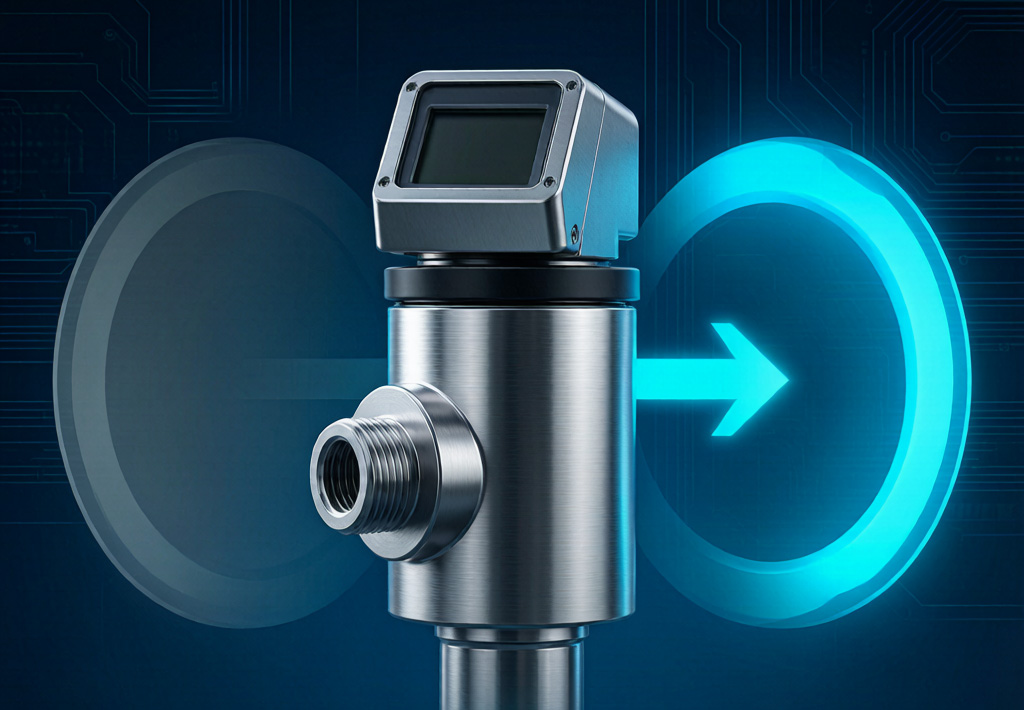
In 2026, IEC/TC 65 adjusted the performance test basis for PMTs from the IEC 61298 series to the IEC 62828 series, changing the EMC certification path for related products accordingly. Based on the standard texts and publicly available information from major certification bodies, this article provides a systematic analysis of the technical test requirements, protection design strategies, and certification compliance impact.
The core conclusion is given upfront: the technical EMC test requirements for PMT products—including ESD, EFT, and Surge—have not changed. The changes are concentrated in the standard reference relationships and compliance documentation requirements.
For manufacturers, clarifying the boundary between what has "changed" and what has "not changed" serves two purposes: it avoids unnecessary rework of protection solutions, and it allows for proactive planning of the transition schedule for certification and compliance documentation. Shanghai Leiditech has long tracked EMC compliance trends for industrial transmitters, and this article provides a systematic overview based on its engineering experience.
I.Standard Adjustment: PMT Established as an Independent Dedicated System
Industrial process measurement transmitters (PMTs) are used for on-site measurement and signal conversion of process variables such as pressure, temperature, and flow. They are widely deployed in industrial environments including power, petrochemical, metallurgy, and water treatment, where electromagnetic interference such as ESD, fast transients, and surges are common. Their EMC performance directly determines measurement stability and system safety.
Previously, the performance tests for industrial PMTs were scattered across the general measurement equipment standard IEC 61298, with EMC tests separately referencing IEC 61326. This created a "compound reference" state where test bases varied by product type, and laboratory result traceability was insufficient.
The 2026 edition of IEC/TC 65 has established a dedicated test system for PMTs, separating them from general measurement equipment: IEC 62828-1 specifies the general test procedures and reference conditions for all types of transmitters (regardless of analog/digital output or measured variable differences); IEC 62828-2 specifies pressure-specific procedures and explicitly covers pressure transmitters with remote seal assemblies — if the seal assembly is inseparable from the main body, they must be evaluated as a single device.
The core point of this adjustment is that IEC 62828 itself does not define any EMC technical requirements. In clause 5.3.7, it clearly states that all EMC tests are directed to the IEC 61326 series. Thus, the EMC compliance basis for PMTs has been simplified from the compound reference of "61298 + 61326" to the single-layer logic of "62828 pointing to 61326."
A boundary change requiring special attention: IEC 61298-1/-3:2026 ED3 has excluded PMTs from their scope. Coverage of PMTs under the old 61298 will be phased out after the transition period. New certification test reports should be based on the 62828 series; the validity of CB reports previously issued under the old 61298 is determined by each NCB individually and does not apply to change projects requiring updated test results.
It should be clarified that this restructuring is an optimization of product standard classification, not an upgrade or downgrade of EMC technical requirements.
II.EMC Testing: Limits/Levels and Methods Remain Unchanged, Only Pre-Test Setup Requirements Have Been Refined
PMTs are subject to the limits for "industrial environment" equipment under IEC 61326-1:2020 (immunity Table 2, emission Class A), with specific test methods derived from the IEC 61000-4 basic standards. The reference architecture is two-tier cascaded: Level 1 from IEC 62828-1 to IEC 61326-1, and Level 2 from IEC 61326-1 to the IEC 61000-4 / CISPR series. Both the severity levels and the Criterion B pass/fail criteria remain unchanged. In terms of emission requirements, industrial PMTs apply Class A limits, with immunity more stringent than domestic Class B but emission margins relatively looser. Although the IEC 61000-4 sub-standards are continuously revised, the levels and test methods referenced by IEC 61326-1:2020 remain stable. This revision did not introduce any jump to new versions of the basic standards.
What is new in this adjustment is not technical content but test process requirements: the test environment must be maintained within ±10% of standard reference conditions with real-time recording of temperature, humidity, and atmospheric pressure; sample installation must fully replicate the field configuration, including cable type, length, shield grounding method, and support structure material; the test report must record software version, hardware serial number, test equipment calibration certificate numbers, and CDN (coupling/decoupling network) model and calibration parameters. These requirements raise the bar for laboratory execution and traceability, but do not change the technical protection requirements of the product itself.
III.Protection Design: Hardware Unchanged, Compliance Updated
Since the EMC technical requirements originate from IEC 61326 and the levels remain unchanged, the baseline for protection design remains unchanged. The industry-proven three-tier protection architecture — interface-graded protection, PCB layout isolation, and low-frequency signal return path layered isolation — is fully applicable to IEC 62828-1:2026 without any hardware adjustments.
What needs to be updated is only the compliance documentation: add the standard mapping of "IEC 62828-1:2026 → IEC 61326-1:2020" in the design documents, establishing a one-to-one correspondence between each protection component and the corresponding test item and level; mark the test waveforms and levels corresponding to core components in the protection BOM, and include component datasheets and manufacturer test reports in the compliance archive; state the protection architecture, grounding method, and field arrangement in the test report. Hardware unchanged, documentation completed.
IV.Certification spot checks: standard number changes, essence unchanged
The IECEE CB system has incorporated IEC 62828-1:2026 into the PMT compliance standard catalog. Manufacturers can directly apply for CB test reports and certificates based on this standard. Since IEC 62828-2 is dependent on the general framework of IEC 62828-1, pressure-type PMTs are automatically covered by the CB scheme. Tests are conducted as a combination of "IEC 62828-1 general requirements + IEC 62828-2 specific procedures," and the test report must reflect the reference mapping of "62828 → 61326."
Domestically, CQC has accepted IEC 62828-1:2026 as a valid basis for voluntary certification. However, EMC testing still aligns with the domestically adopted GB/T 18268 series (equivalent to IEC 61326). Currently, CCC does not include general industrial PMTs in the mandatory catalog, and market supervision spot checks still reference GB/T 18268, with no new standard inspection requirements issued yet.
As of August 2026, certification bodies have not yet released a mandatory transition deadline. However, newly initiated certification projects must use the 62828 series as the test basis. Conclusion: The certification basis has been updated with a new standard number, but the testing essence remains unchanged.
V.Action Recommendations: Compliance Transition Roadmap
New development projects: Use "62828→61326" as a mandatory design input. Reuse the proven three-tier protection architecture; no adjustments are required for core protection component parameters. At the design output stage, embed IEC 62828-1:2026 requirements into the test plan, test report, and declaration of conformity to ensure consistent standard references.
Mass-produced products: Organize the technical team to conduct a gap assessment of existing test reports, declarations of conformity, and technical specifications against the IEC 62828-1:2026 general framework. Confirm that existing ESD/EFT/Surge data meets IEC 61326-1:2020 requirements. If satisfied, apply to the certification body for a certificate change to replace the basis from the old 61298 to IEC 62828-1:2026. This process requires no retesting, only supplementary standard mapping documentation. Since no retesting is required, the effort and cost of the certificate change are significantly lower than a full new certification, making it the most economical compliance path for mass-produced products.
Continuous follow-up: Monitor the domestic adoption progress of the IEC 62828 series by the Standardization Administration of China. No hardware protection adjustments are needed before the standard is formally adopted as GB/T. Select laboratories with IECEE CBTL qualification and existing IEC 61326 series test accreditation. Confirm with certification bodies in advance that the report includes the required mapping relationships, protection architecture description, and field arrangement diagrams to avoid delays due to compliance wording discrepancies.
This article is compiled and published by the Leiditech EMC engineer, focusing on EMC compliance and protection component selection for industrial transmitters, and continuously sharing frontline engineering practices.
Need a customized three-tier protection BOM for your PMT ports? Contact the Leiditech EMC technical team for one-on-one selection support and compliance documentation templates.