
New cost-saving method for DC-DC: Replace with a snap-back TVS to directly reduce the voltage rating of downstream power chips and lower costs. Introd
Engineers working on industrial, automotive, and consumer power hardware have almost all fallen into the same cost trap: a TVS must be added to the power input for surge protection, but conventional TVS devices have high residual clamping voltage Vc during surges. To avoid burning out the downstream DC-DC, engineers are forced to select high-voltage, expensive power chips. This directly drives up the total BOM and procurement costs, compressing profit margins on high-volume shipments.
Many people assume that "a cheap TVS can be chosen arbitrarily," but there is actually a reverse cost-saving approach: a slight increase in TVS procurement cost can significantly reduce the DC-DC chip's voltage rating requirement, resulting in an overall reduction in total system cost. The key component is the snap-back low-clamping-voltage TVS. Below, we will calculate this cost trade-off clearly based on principles, measured parameters, and real industrial case studies.
I. First, understand why conventional TVS forces you to buy expensive DC-DC chips.
1. Inherent characteristic of conventional TVS: the higher the current, the higher the residual voltage
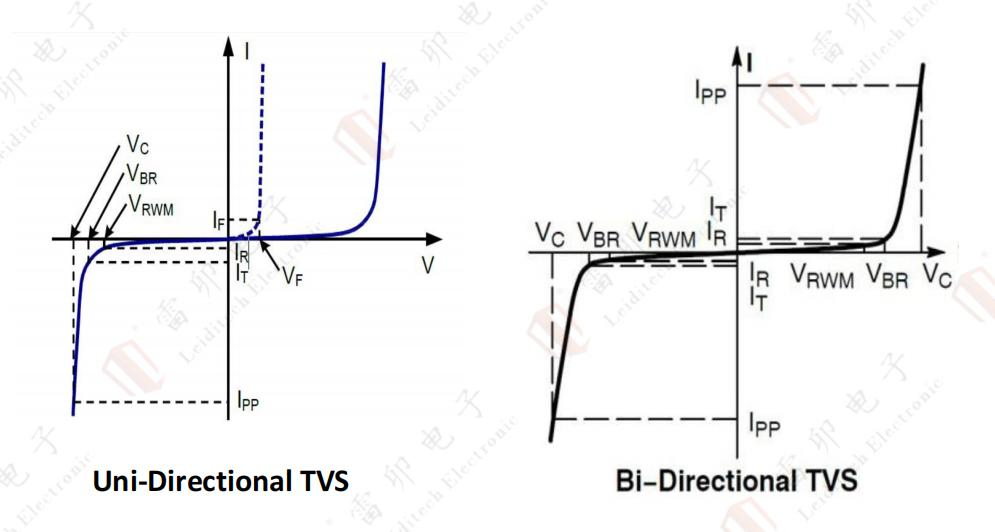
After a conventional TVS breaks down and conducts, the larger the surge current IPP, the higher the clamping voltage VC rises linearly.
Take a typical industrial 24V bus as an example:
Generally considering a 9-32V wide input range, a conventional 33V TVS such as SMDJ33CA is commonly used, with a maximum clamping voltage that can reach 53.3V under peak surge current.
According to hardware design safety margin rules, the downstream DC-DC chip's voltage rating must be higher than the TVS's maximum residual voltage; otherwise, surge testing may directly burn out the power IC.
As a result, the designer is forced to abandon the cost-effective 36V-rated DC-DC and instead select a higher-voltage 60V/80V version, with the unit cost rising significantly.
2. Common industry pain points
l Low EMC surge test pass rate, requiring repeated board revisions and retesting, extending project timelines.
l High-voltage DC-DC chips are in tight supply, with extended lead times.
l In mass production, the per-unit DC-DC cost difference accumulates; with millions of units shipped, the cost gap can reach hundreds of thousands.
l Higher-voltage power chips have higher on-resistance, worsening overall system power consumption and temperature rise.
II. Snap-Back TVS Core Principle: Instantly Reducing Residual Voltage During Surges to Relieve Pressure on DC-DC

The snap-back TVS internally uses an SCR (silicon-controlled rectifier) structure with a negative resistance snap-back region. Its core characteristics are two-fold:
1. Once the voltage reaches the trigger voltage VT1, it instantly pulls the clamping voltage down to the holding voltage Vh.
2. Even as the surge current continues to increase, the clamping voltage VC rises only slightly. Under the same IPP, the clamping voltage is more than 30% lower than that of a conventional TVS.
In simple terms: when a surge hits, the snap-back TVS firmly clamps the bus voltage spike to a very low level, significantly reducing the voltage stress on the downstream DC-DC, eliminating the need to reserve excessive voltage margin.
III. Measured parameter comparison: Conventional TVS vs. Snap-back TVS (24V industrial power supply scenario)
Component cost difference (reference bulk pricing from LCSC)
Conventional TVS:

Snap-back TVS:

DC-DC chip cost difference (reference bulk pricing from LCSC)
l 60V-rated DC-DC:

l 40V-rated DC-DC:

Single-unit DC-DC cost difference: ¥2.79
Single-unit TVS cost difference: only ¥0.40
Per-unit net cost reduction calculation
Per-unit total cost = DC-DC savings - TVS cost increase = 2.79 - 0.4 = 2.39 RMB per unit.
If annual shipment volume is 100,000 units, the power supply circuit alone saves 200,000 RMB per year in direct costs; the larger the shipment volume, the more significant the cost reduction effect.
· TVS cost increase: 0.4 RMB, maximum surge clamping voltage locked at 38V.
· DC-DC downgraded to 40V rating, unit price reduced to 1.78 RMB.
· Test results: IEC 61000-4-5 line-to-line ±2kV surge fully passed, no burnout.
· Per-unit power supply circuit net savings: 2.39 RMB. For a customer shipping 100,000 units annually, this translates to 200,000 RMB in annual procurement cost savings, while also resolving chip burnout rework and surge testing issues, with after-sales maintenance costs decreasing simultaneously.
IV.Selection Guide: Recommended Snap-Back TVS for Different Scenarios
|
Leiditech Snap-Back TVS Part Number Table for Power Supply Applications, Effectively Reducing Downstream DC-DC Cost |
||||||||||||
|
Model |
PPP (W) |
VRWM (V) |
Vbr min (V) |
Vc max(V) |
IPP(A) |
Package |
||||||
|
LM10S26CAT |
11000 |
26 |
28.9 |
27 |
- |
DO-218AB |
||||||
|
LM10S28CAT |
11000 |
28 |
31.1 |
29 |
- |
DO-218AB |
||||||
|
LM10S33CAT |
11000 |
33 |
36.7 |
32 |
- |
DO-218AB |
||||||
|
LMBJ58CP5 |
3500 |
58 |
64.4 |
51 |
70 |
SMB |
||||||
|
LMBJ58CP4 |
3000 |
58 |
64.4 |
60 |
50 |
SMB |
||||||
|
3LM26CA |
3000 |
26 |
28.9 |
28.1 |
152.2 |
SMC |
||||||
|
3LM33CA |
3000 |
33 |
36.7 |
38 |
101.8 |
SMC |
||||||
|
5LM26CA |
5000 |
26 |
28.9 |
30.3 |
202.8 |
SMC |
||||||
|
5LM33CA |
5000 |
33 |
36.7 |
38 |
151.2 |
SMC |
||||||
|
6LM26CA |
600 |
26 |
28.9 |
24.5 |
33.7 |
SMB |
||||||
|
6LM33CA |
600 |
33 |
36.7 |
30.1 |
26.32 |
SMB |
||||||
|
Leiditech Snap-Back ESD Part Number Table (Continuously Updated) |
||||||||||||
|
Part Number |
Vrwm(V) |
Vbr |
VCmax@A |
C(PF) |
package |
application |
||||||
|
ULC0321CDNH |
3.3 |
8 |
8V@5A |
0.5 |
DFN0603 |
3.3V high-speed signal |
||||||
|
ULC0321S |
3.3 |
6.3 |
15V@5A |
0.2 |
DFN0603 |
|||||||
|
ULC0322P10LV |
3.3 |
3.5 |
5V@10A |
0.6 |
DFN0603 |
|||||||
|
ULC0342CDNH |
3.3 |
4 |
5.5V@6A |
0.22 |
DFN1006 |
|||||||
|
ULC0342P |
3.3 |
3.5 |
5V@10A |
0.6 |
DFN1006 |
|||||||
|
LM112501 |
3.3 |
3.5 |
8V@16A |
1.5 |
SOD323 |
|||||||
|
ESD0321CW |
3.3 |
3.7 |
8V@21A |
30 |
DFN0603 |
3.3V general-purpose I/O |
||||||
|
ULC1811CDNH |
18 |
22 |
6V@5A |
0.5 |
DFN1006 |
18V, 24V signals such as Type-C CC/SBU |
||||||
|
ULC2421CS |
24 |
30 |
6V@5A |
0.5 |
DFN0603 |
|||||||
|
ULC2421CDNH |
24 |
26 |
7V@6A |
0.48 |
DFN0603 |
|||||||
|
ULC2442CS |
24 |
30 |
6V@5A |
0.5 |
DFN1006 |
|||||||
|
ESDA05CP30 |
5 |
6 |
7.2V@8A |
15 |
DFN1006 |
5V general-purpose I/O |
||||||
|
ESDA05CPX |
5 |
6 |
8.5V@18A |
25 |
DFN1006 |
|||||||
|
ESDA05CP |
5 |
6 |
10V@8A |
15 |
DFN1006 |
|||||||
|
ULC0542CDNH |
5 |
8 |
6V@5A |
0.5 |
DFN1006 |
5V High-Speed Signal |
||||||
|
ULC0511CDNH |
5 |
6 |
7V@9A |
0.3 |
DFN1006 |
|||||||
|
PTVS0542H100 |
5 |
6.3 |
9V@100A |
200 |
DFN1006 |
5V Power ESD Protection |
||||||
|
USSD0571P6W |
|
6 |
11V@110A |
350 |
DFN1610 |
|||||||
|
SMDA05N |
5 |
5.5 |
9V@50A |
110 |
DFN1006 |
|||||||
|
SMDA45N |
4.5 |
5.0 |
8.8V@80A |
200 |
DFN1006 |
4.5V power ESD protection |
||||||
IV. Summary: A new approach to hardware cost reduction — stop focusing on saving small amounts on protection components
Most engineers' component selection habits prioritize lowering the unit price of the TVS, but they overlook the significant cost difference in downstream DC-DC and main control chips, falling into the trap of "saving a few cents on the TVS only to spend several extra yuan on the IC."
The core cost-reduction logic of snap-back low-clamping-voltage TVS is: use a small premium on the TVS to enable a downgrade in the DC-DC chip's voltage rating, achieving a substantial reduction in overall BOM cost while also improving EMC pass rates, reducing after-sales rework, and optimizing overall system power consumption — a win-win solution that balances both cost and reliability.
If your equipment suffers from ESD and surge burnout of DC-DC converters on 24V industrial buses, automotive 12/24V power supplies, Type-C fast charging, RF ports, or other interfaces, and power chip costs remain high, prioritize evaluating Leiditech's snap-back TVS/ESD solutions.